


Dried pineapple is a common fruit snack that retains the aroma and nutrients of fresh pineapple while being easy to store and carry. But what is the dried pineapple making process? The production process varies depending on the type of pineapple and processing requirements. Below, we will introduce the main processing steps.
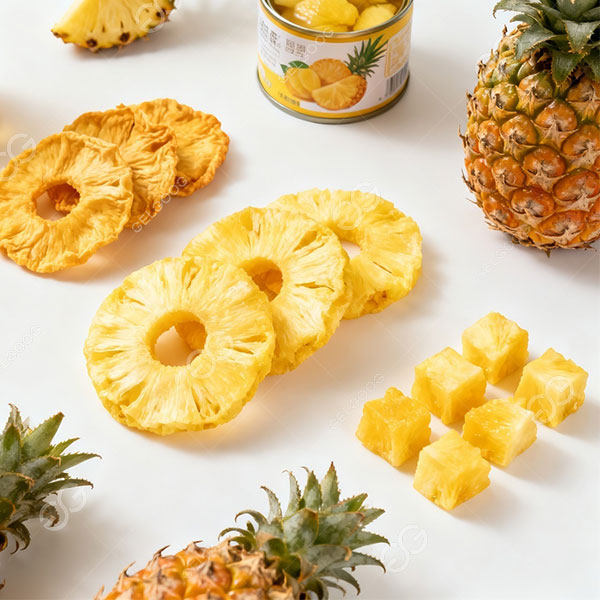
1. Washing
This step is to remove dirt, dust, and microorganisms from the surface of the pineapple, ensuring food safety.
Key points of operation:
Use a washing machine to improve cleaning efficiency and minimize damage, ensuring the pineapple is clean before proceeding to the next process, thus avoiding cross-contamination.
2. Peeling and Coring
This step removes the rough outer peel and the hard core, resulting in a better texture for the processed product.
Key points:
Peeling can be done manually or mechanically. After peeling, check for any remaining fruit eyes. Ensure that the pineapple's shape is not damaged during coring.
3. Slicing / Dicing / Cubing
This step determines the shape and size based on the finished product specifications and market demand. This step affects drying efficiency, texture, and the appearance of the finished product.
Method options:
Slicing: Commonly used for round pineapple slices, with a thickness typically of 5–10 mm.
Dicing: Often used for soft dried pineapple or small packaged snacks.
Cubing: Used in processed foods such as baked goods and cereal mixes.
Precautions:
The slices must be of uniform thickness; uneven thickness will lead to inconsistent drying.
The knife must be clean and sharp to avoid squeezing the fruit pulp and causing juice loss.
Minimize the time the fruit pulp surface is exposed to oxidation; apply protective treatment if necessary.
4. Sugar Impregnation (Optional Step)
Sugar impregnation is a key processing step in many commercially produced dried pineapples, enhancing flavor, color, and shelf life.
Process Characteristics:
Pineapple pieces are soaked in a sugar solution for 2–24 hours.
Sugar concentration is adjusted according to product requirements, commonly 40%–65%.
Vacuum impregnation can also be used to increase the penetration rate of the sugar solution.
Precautions:
Excessive sugar impregnation can result in an overly sweet product and reduced nutritional value.
The sugar solution needs to be replaced regularly to prevent contamination.
5. Drying
Reducing moisture content through heat-induced dehydration.
Process key points:
Drying temperature is generally controlled between 55–70℃.
Gradual temperature increase to prevent excessive surface hardening and the formation of a "hard outside, wet inside" condition.
Control the final moisture content to approximately < 15% to prevent microbial growth.
The production of dried pineapple relies on standardized raw material handling, hygiene management, processing control, and drying techniques. Different processing methods also affect the final flavor and the type of pineapple processing equipment required.